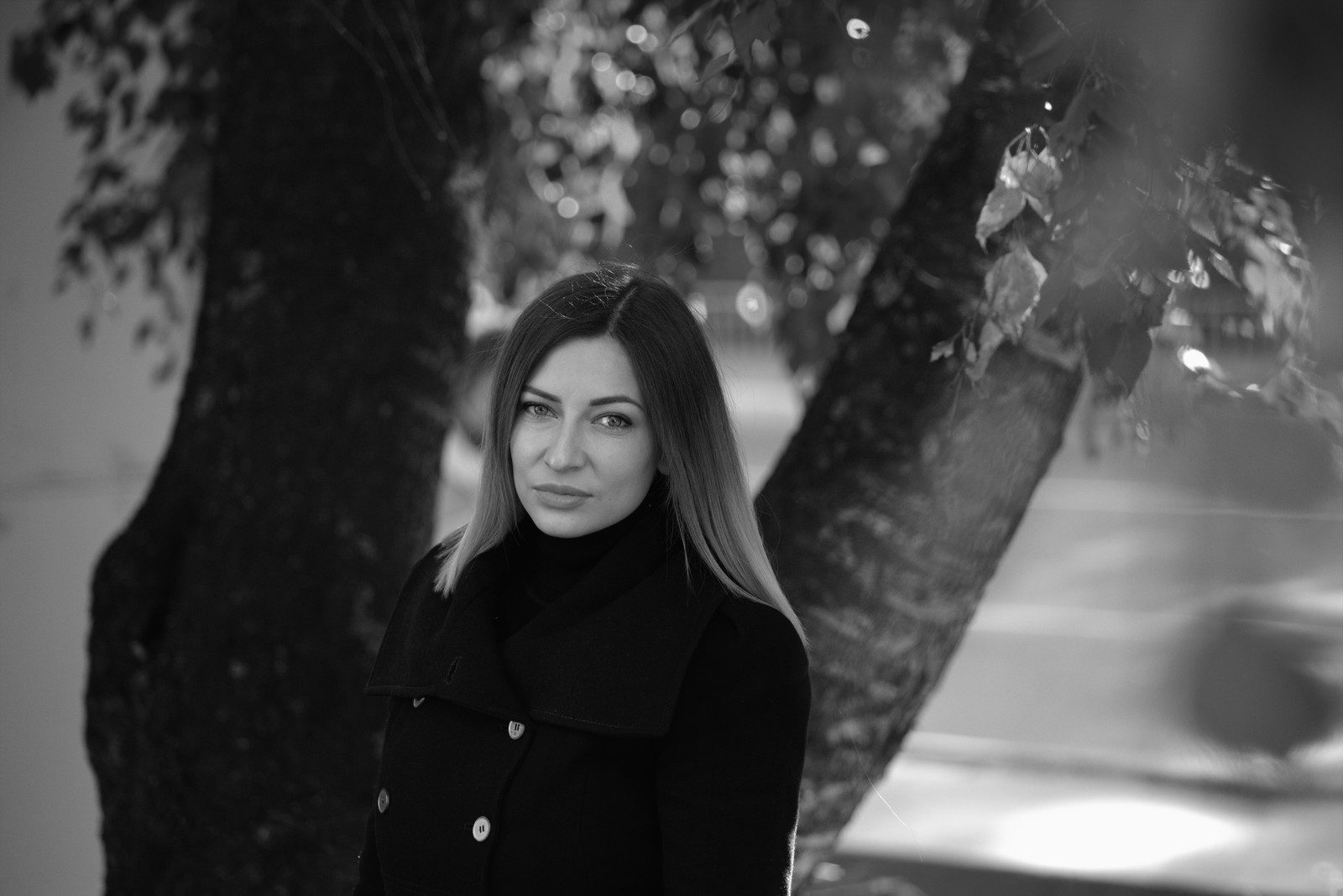
Fujifilm Acros R — Picture Style for Canon
X-Trans emulation — an approximation, not affiliated with the brand
A look inspired by Fujifilm Acros R, adapted as a Picture Style (PF3) with a compatible structure for Canon EOS cameras: it loads as its own style and works in-camera and in Digital Photo Professional. It is not a Fujifilm product nor is it affiliated with the brand.
The recipe
Six-axis grading (H / S / L)
| Axis | Hue | Sat | Lum |
|---|---|---|---|
| Red | 0 | -100 | 0 |
| Yellow | 0 | -100 | 0 |
| Green | 0 | -100 | 0 |
| Cyan | 0 | -100 | 0 |
| Blue | 0 | -100 | 0 |
| Magenta | 0 | -100 | 0 |
Tone curve (11 points)
0,4 · 24,16 · 48,38 · 72,73 · 96,108 · 128,148 · 159,179 · 191,209 · 215,230 · 239,247 · 255,250
Compatible with Canon EOS cameras with Picture Styles (loaded via EOS Utility, Picture Style Editor or SD card). The file includes the six-axis grading, the tone curve and the basic parameters; the preview on this page was generated with the same color transformation written into the PF3.
About the Fujifilm Acros R look
The Acros family is Fujifilm's take on ultra-fine-grain black and white, and Acros R brings that spirit to its cleanest, most orderly form. It is an emulsion for photographers who do not want the gritty drama of reportage but faithful rendering: smooth transitions, grays that chain together without jumps, and discreet sharpness that respects detail instead of shouting it.
Its visual signature is softness with structure. Blacks are deep but never crushed, highlights fall off with patience, and the barely perceptible grain shows up only in the midtones to lend organic texture. Compared with noisier monochromes, Acros feels like studio work even when you are shooting on the street: clean, elegant, almost silent. It is the style of photographs that hold up large and in print.
It shines in architecture, studio portraiture, still life, meticulous landscape and any subject where shape matters more than anecdote. Under soft, diffused light it hits its best form; under harsh light it keeps its composure and delivers clean contrast without dirtying the shadows. For anyone starting out in black and white it is also an easy read: almost everything you shoot with it comes out balanced.
As a Picture Style for Canon it reproduces that cleanliness with a gentle tone curve and a monochrome grade with no color drift. Sharpness is kept in check, as befits a fine-grain emulsion, and you can raise it in-camera if your lens calls for it. Perfect for RAW+JPEG: the JPEG comes out finished and the RAW stays untouched for your own development.
To get the best from it, shoot cleanly framed formats and let the grays breathe: rooftops, concrete, water, fog and studio skin are its ground. A polarizer helps densify skies without breaking the overall softness. And if you print, this is one of the few looks that flatters large sizes without turning heavy.
Frequently asked questions
Is this an official Fujifilm product?
No. It is an independent emulation created by FilmTone, inspired by the color character of Fujifilm Acros R. It is not affiliated with or endorsed by Fujifilm; film names are mentioned only to describe the look being emulated.
Which Canon cameras support this Picture Style?
Any Canon EOS with Picture Styles and User Def. slots: DSLRs from the 350D onward, EOS R and M mirrorless bodies, and recent PowerShot models. The PF3 file registers into a free slot and is selected like any factory style.
How do I install it on the camera?
Three routes: with EOS Utility over USB or Wi-Fi (the most universal), opening the PF3 in Picture Style Editor and registering it, or from the SD card on recent models that allow it. We have a step-by-step guide in the guides section of the site.
Does it affect my RAW files?
The style applies to the JPEG, the on-screen preview and the RAW pre-render, but the RAW keeps all the sensor information: you can change or remove the style later in Digital Photo Professional. Shooting RAW+JPEG gives you both the instant look and the untouched digital negative.
Does it cost anything to download?
No. Downloading the PF3 is free and you can customize the name your camera will show (1–24 ASCII characters). The project runs on voluntary Ko-fi donations.